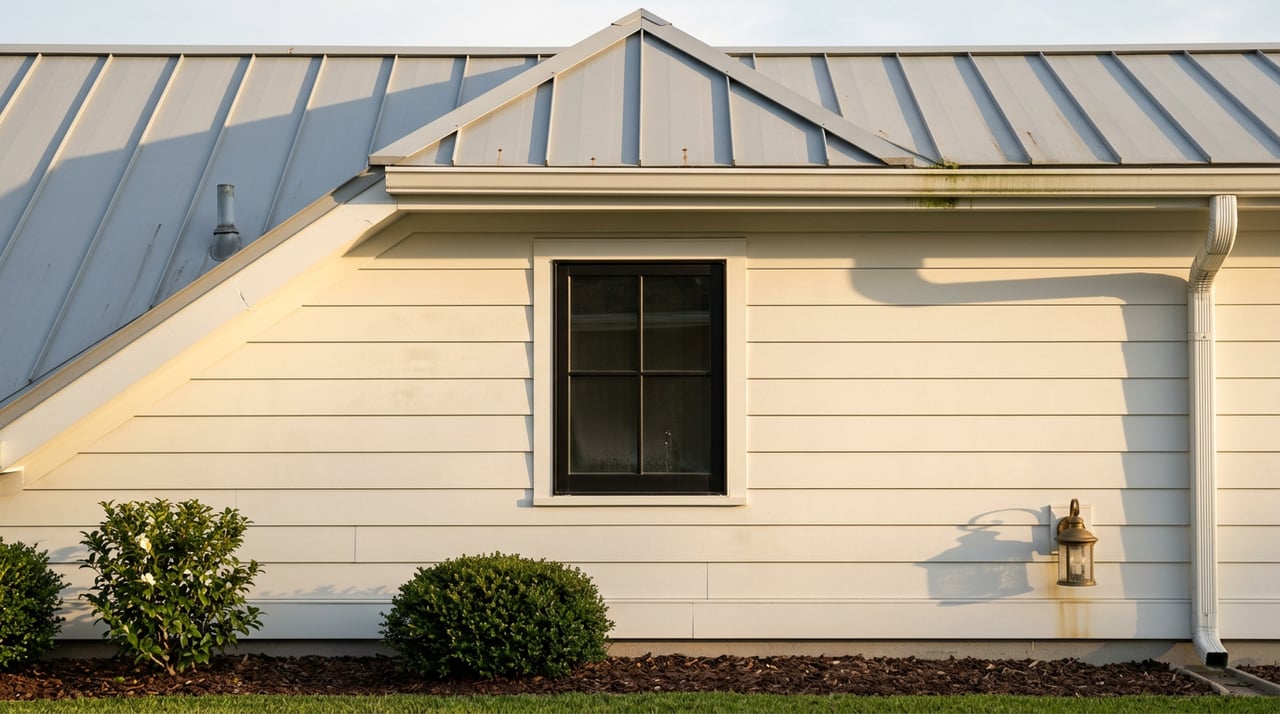
Gulfport Price Per Square Foot vs. Insurance Costs
August 13, 2026
August 13, 2026
Pull up three different housing data sites and ask each one for Gulfport's median home price this year, and you'll get three different answers, sometimes moving in opposite directions. One tracker had the city's median climbing 7 percent year over year as of February 2026. Another had it falling nearly 2 percent over roughly the same stretch. A third put the September 2025 median a full 3.7 percent below the year before. Nobody is lying. They're measuring different slices of the same noisy market.
That disagreement is a useful warning before you ever look at a single listing in Gulfport. If the aggregators can't settle on one number for the whole city, a citywide median was never going to tell you much about what your money buys on a specific street. The more honest comparison happens at the neighborhood level, and once you get there, a second number starts working against the first one in ways most buyers never see coming: insurance.
Gulfport's neighborhood-level price gaps are real and they're wide. As of spring 2026, coastal-adjacent pockets like West Beach and East Beach run roughly $253 and $278 per square foot, respectively, while inland areas like Gulfport Heights sit closer to $99 a foot. Fairgrounds carries a median sale price around $100,000. Pine Hills lands near $161,400, Broadmoor around $163,000, and North Gulfport spans a wide range from roughly $45,000 up to $220,000 depending on the specific block and condition of the home.
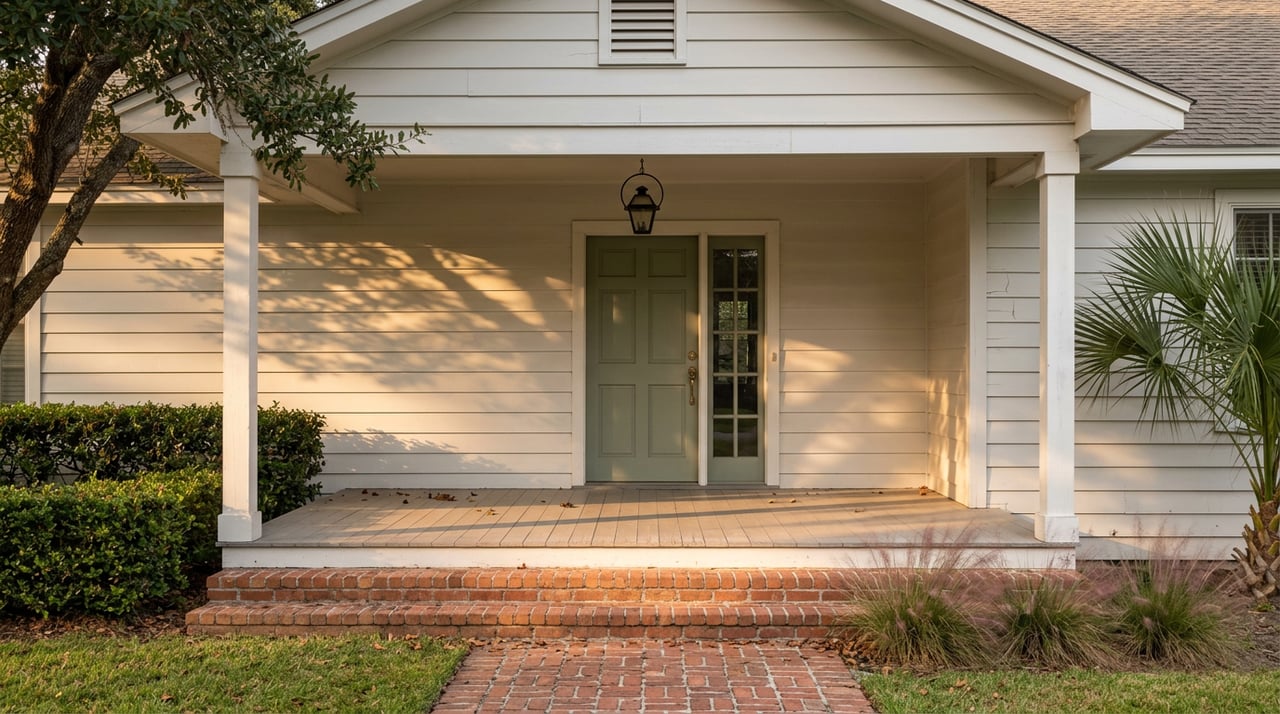
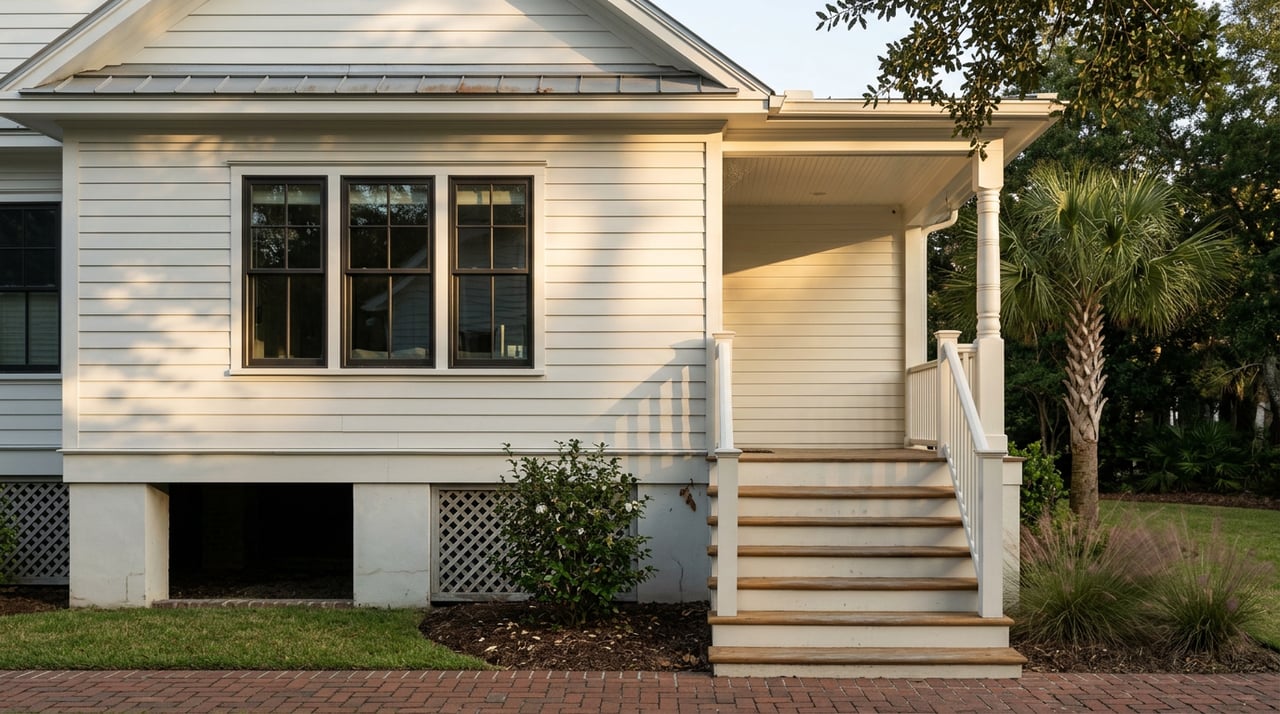
On paper, that's a straightforward tradeoff. Pay more per foot to be closer to the water and the downtown corridor, pay less to live inland with a longer drive to the beach. West Beach's housing stock skews older, with a reported median year built around 1950 and typical single-family homes near 1,577 square feet, mixing original cottages with updated properties. East Beach carries a similar age range, with vintage cottages and bungalows sitting alongside Colonial Revival homes and newer custom builds. North Gulfport's typical home dates closer to 1969 and runs smaller, around 1,353 square feet on average.
That's where most neighborhood comparisons stop. It's also where they miss the number that actually determines whether the cheaper house stays cheap.
Homeowners insurance along the Mississippi coast runs through a structure that doesn't care which side of downtown Gulfport your street sits on. The Mississippi Windstorm Underwriting Association, the state's insurer of last resort for wind and hail coverage, sets its eligibility by county. According to WDAM, Harrison County, which includes all of Gulfport, sits inside that service territory alongside Hancock, Jackson, Pearl River, Stone, and George counties. A buyer choosing Gulfport Heights over East Beach because it feels farther from the coast isn't actually opting out of windpool exposure. Both addresses fall under the same association, the same base eligibility, and increasingly, the same rate environment.
That rate environment shifted this year. MWUA implemented a 16 percent increase to windpool premiums effective January 1, 2026, a hike Insurance Commissioner Mike Chaney tied to the state pulling back from a subsidy strategy it had leaned on for two decades.
Chaney has said the state directed more than $400 million since 2005 toward subsidizing Gulf Coast insurance rates by purchasing reinsurance, a strategy he's described as unsustainable long term.
The pullback shows up in the region's overall numbers too. Insurify's 2026 Home Insurance Report put the average annual cost of homeowners insurance for the Gulfport-Biloxi metro at $7,284 in 2025, with that figure projected to climb to roughly $7,459 by the end of 2026, the highest average in the state. For context, a south Mississippi insurance agent told a Gulf Coast news outlet last year that wind coverage alone can account for up to 70 percent of a homeowner's total premium in this part of the state. That's not a line item tucked into closing costs. For a lot of buyers, it's a second mortgage payment.
None of that resets based on whether your price per foot was $99 or $278. It resets based on something else entirely.
If the windpool doesn't segment by neighborhood, what explains why one Gulfport homeowner's premium looks nothing like another's? Roof age and construction standard do most of the work. Mississippi law requires insurers to offer discounts to homeowners who bring their property up to the IBHS FORTIFIED standard, a certification focused on roof-deck attachment, sealed roof decks, and other wind-resistant construction details. Homes carrying that certification held up dramatically better in past storms. During Hurricane Sally, 95 percent of FORTIFIED-roofed homes in the storm's path suffered little to no damage.
This is where the neighborhood age data from earlier starts to matter again, but in the opposite direction from what price per foot suggests. A West Beach cottage built around 1950 and a North Gulfport ranch built around 1969 are both old enough to predate FORTIFIED-era construction standards by decades. Neither one gets a pass on roof underwriting just because it sits on the cheaper side of the price-per-foot chart. If that inland home hasn't had a roof replacement or FORTIFIED documentation, it can carry a windpool premium indistinguishable from a coastal property built in the same era. The $150-a-foot gap between the two addresses buys square footage and proximity. It does not buy a cheaper insurance underwriting file.
The reverse holds too. A newer custom build in East Beach, the kind the neighborhood's listing mix already includes alongside its older bungalows, can carry meaningfully lower insurance costs than a 1960s Gulfport Heights cottage with an original roof, even though the East Beach home costs far more per square foot. Price per foot and insurable risk are simply answering two different questions, and buyers who only ask one of them are working with half the picture.
There's a state-level lever that softens this math for older housing stock, and it moved from theory to law this year. Mississippi's original hurricane damage mitigation grant program, written into state law after Katrina to help homeowners fund wind-resistant upgrades, had been halted in mid-2025 after the legislature pulled the Insurance Department's spending authority, as Insurance Business reported. Both chambers approved Senate Bill 2409, the Strengthen Mississippi Homes Act, in early April 2026, according to U.S. News. The Strengthen Mississippi Homes Program inside the Mississippi Insurance Department has an effective date of July 1, 2026, a date that's now behind us, according to Smart Home America.
The program funds grants of up to $10,000 per home for retrofits that meet the IBHS FORTIFIED roof standard, backed by roughly $16 million a year from the insurance industry, enough to cover an estimated 1,500 to 1,600 homes annually. State Senator Walter Michel, who chairs the Senate Insurance Committee and helped author the bill, has pointed to roof failure as the root cause of most storm losses.
"The most damage that's done is when a roof is compromised and water gets in the home," Michel said. "This addresses that and strengthens our homes across Mississippi when they are faced with tornadoes or hurricanes." Source: Magnolia Tribune.
For a buyer weighing an older Gulfport Heights or North Gulfport property against a similarly priced coastal option, this is the program to ask about before assuming a roof upgrade is out of reach. Grant rounds, eligibility rules, and documentation requirements are still being finalized by the Insurance Department, so confirming current application status with a licensed local agent remains the right first step.
Not a single one, universally. The honest answer is that price per square foot tells you what you're paying for space and location, and it tells you nothing about what you'll pay to insure the structure standing on that land. Before treating any Gulfport neighborhood's low price-per-foot as a discount, it's worth getting three numbers on the same page: the home's actual roof age and any FORTIFIED documentation, a current windpool and homeowners insurance quote specific to that address, and the neighborhood's typical build era, since that shapes what you're likely to find on similar listings nearby. A cheaper number per square foot that comes with an aging, uncertified roof can cost more every month than a pricier listing that already cleared the underwriting bar.
Does living farther from the beach in Gulfport mean lower windpool insurance rates? Not automatically. MWUA eligibility is set at the county level across Harrison and five other coastal counties, so a Gulfport address inland and one near the water both fall under the same windpool service territory. Individual premiums still vary based on the specific property, particularly roof age and certification.
Is a FORTIFIED roof worth pursuing before buying or selling in Gulfport? It can meaningfully affect insurance underwriting, since Mississippi law requires insurers to offer premium credits for FORTIFIED-certified homes. Confirm current credit amounts and documentation requirements with a licensed Mississippi insurance agent, since program details and carrier participation can shift.
Is the Strengthen Mississippi Homes grant program actually open now? The program has an effective date of July 1, 2026, but grant rounds, application windows, and county-by-county rollout details are administered by the Mississippi Insurance Department. Check directly with the department or a licensed local agent for the current application status before counting on a specific timeline.
If you're weighing a specific block in West Beach against one in Pine Hills or Broadmoor, price per square foot is only the opening number. Glenn-Marie Fitzgerald can walk through what a given property's age and roof condition actually mean for your total monthly cost, not just its listing price, so you're comparing Gulfport neighborhoods on the number that follows you home after closing.
This article is general information, not legal, tax or financial advice. Consult a qualified professional about your situation.
Stay up to date on the latest real estate trends.
Get assistance in determining current property value, crafting a competitive offer, writing and negotiating a contract, and much more. Let me guide you through your home-buying journey.
GLENN-MARIE FITZGERALD
2137 E PASS RD GULFPORT MS 39507