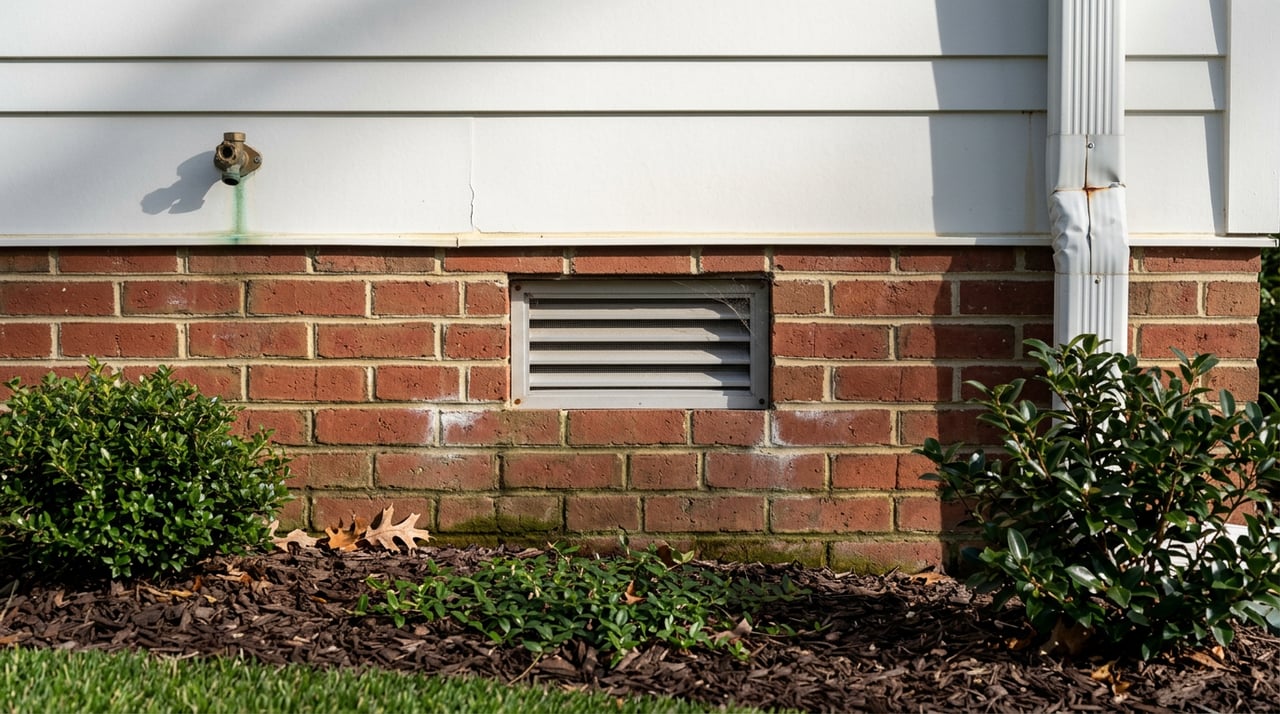
What a Termite Inspection Means in a Gulfport Home Sale
August 13, 2026
August 13, 2026
In May of this year, a high school softball championship game in Hattiesburg had to pause play. Not for weather, not for a disputed call, but for termites. Hundreds of thousands of winged insects swarmed the field lights at dusk, drawn in by the glow the way moths are, except these moths eat houses. Mississippi Public Broadcasting quoted Kolby Krohn, an entomologist and chief operating officer at Redd Pest Solutions in Biloxi, describing coastal swarms as "it's almost like it's snowing outside." That's not a Hattiesburg problem. Harrison County, where Gulfport sits, is one of the roughly two dozen Mississippi counties where Formosan subterranean termites are considered established rather than occasional, according to Mississippi State University Extension Service's tracking of the species.
If you own a home in Gulfport, that swarm already happened this year whether you noticed it or not. And if you're getting ready to list this fall, that fact quietly follows your house into the paperwork.
Reeves & Mestayer says that almost every Mississippi real estate closing involving a lender requires a Wood Destroying Insect Report, the document most people just call the termite letter or the WDIR. It has to be completed by a licensed pest control operator, following rules set by the Mississippi Department of Agriculture and Commerce's Bureau of Plant Industry. The inspector walks the property and documents what they can see, in the places they can actually get to.
That last part is the whole story. The report itself states plainly that it is not a structural damage report, and that the inspectors completing it are not engineers or builders. It covers visible and accessible areas only. Anything behind a finished wall, under a slab, or inside a sealed crawlspace void is, by design, outside its scope.
Here's the part most sellers never notice, because they never read past the checkboxes. The official WDIR form still carries language explaining that the information collected is used for evaluating the property for a VA or HUD insured loan. The report wasn't originally written to reassure a buyer that their future home is bug-free. It was written to give a federal loan program a standardized way to assess collateral risk before backing a mortgage.
It now touches conventional buyers too. But the DNA of the document hasn't changed. It's a risk snapshot for the transaction, not a warranty for the house. That's why a "clear" report and an infestation discovered eighteen months later aren't actually a contradiction. The report only ever promised to describe what was visible on one particular day, in the rooms someone could physically walk into.
Every Mississippi county deals with native eastern subterranean termites. They're common, they're manageable, and pest control companies have decades of routine practice treating them. Formosan termites are a different animal, and the Gulf Coast counties, Harrison included, carry the heaviest concentration in the state.
A few things make Formosan colonies harder to catch on a single-day inspection:
That timing gap is why a Gulfport listing photographed in March looks nothing like the same house's yard in the last week of May. It's also why a pest control contract written up north doesn't automatically protect a coastal home. Not every company's bond covers Formosan activity specifically, a distinction Mississippi State University Extension's Blake Layton has flagged directly, so a homeowner can carry a termite contract for years and still not have coverage for the species most likely to cause real damage here.
If your home swarmed this past May, or you called a pest control company after seeing activity, that event now sits in your ownership history. Mississippi's seller disclosure requirements ask you to document known material defects, including wood-destroying organism activity; the Mississippi Real Estate Commission's Property Condition Disclosure Statement asks about termite or wood-destroying-insect presence or damage. An "as is" sale doesn't erase that obligation. Mississippi law draws a clear line between a seller who genuinely didn't know about a problem and one who knew and stayed quiet, and that second category is where fraudulent concealment claims come from.
The practical version of this for a Gulfport seller: treated and documented is a very different position than untreated and undisclosed. A clean termite bond with a company that explicitly covers Formosan activity, paired with paperwork showing when treatment happened, tells a buyer's lender and a buyer's agent that the issue was handled. Silence tells a different story once someone finds discarded wings behind a baseboard six months after closing.
A WDIR inspection typically runs somewhere between $75 and $200. An annual termite bond or monitoring contract after treatment generally falls between $150 and $350 a year. Those numbers barely register against what's on the other side of the ledger. Homes on the coast with significant structural termite involvement, meaning sill plates, joists, or subflooring, can face repair costs anywhere from $40,000 to well over $250,000 depending on how far damage has spread before anyone catches it. And even after full repair, a property with a documented termite history typically sells for less than a comparable home without one.
That gap is the actual argument for treating termite risk as part of your pre-listing prep, not as a hurdle that shows up during someone else's buyer inspection. A $200 inspection and a properly matched bond are cheap insurance against a repair bill and a price haircut that can run into six figures.
Local companies including Alliance Pest Control and Mayley's Pest Control both perform WDIR inspections in the Gulfport area and can speak to whether a given bond covers Formosan activity specifically, which is the exact question worth asking before you sign anything.
Does every home sale in Gulfport require a termite report? Nearly every sale involving a mortgage does, though plenty of buyers still ask for one anyway given how established Formosan termites are along the coast.
If my WDIR comes back clear, does that mean my house doesn't have termites? It means the inspector didn't find visible evidence of activity or damage in the areas they could access on that day. It's not a guarantee about concealed spaces, and Formosan colonies in particular can develop carton nests that leave little visible trace even when active.
How long is a WDIR valid before closing? Lenders typically want the report dated close to closing, and many treat it as valid for a limited window, often cited around 90 days, so timing the inspection late in your transaction rather than early in your listing period usually makes more sense.
A house that's been staged well and priced right can still stall at the finish line over a paperwork surprise nobody planned for. If you're weighing a fall listing in Gulfport and want a second set of eyes on what your home's history says about it before a buyer's inspector finds out first, Glenn-Marie Fitzgerald has spent her career on the renovation and staging side of this coast before ever putting a sign in the yard. Get Your Home Value — Start Here.
This article is general information, not legal, tax or financial advice. Consult a qualified professional about your situation.
Stay up to date on the latest real estate trends.
Get assistance in determining current property value, crafting a competitive offer, writing and negotiating a contract, and much more. Let me guide you through your home-buying journey.

GLENN-MARIE FITZGERALD
2137 E PASS RD GULFPORT MS 39507