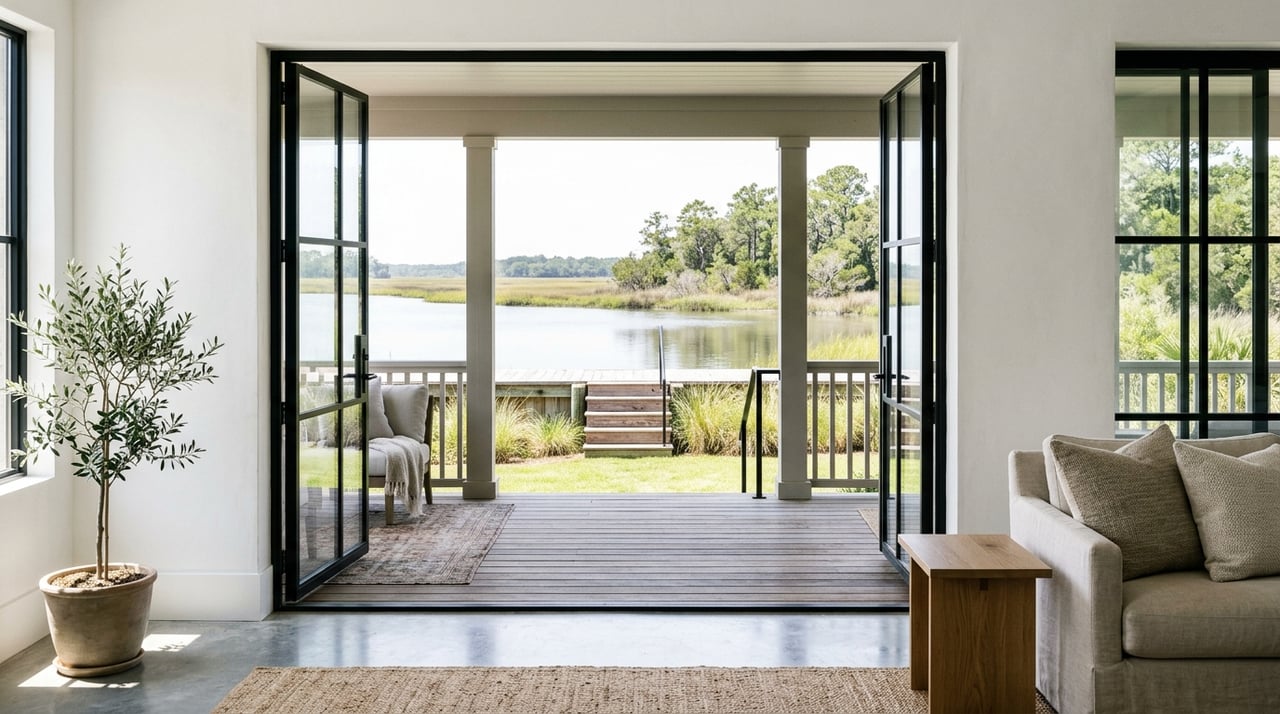
Bay St. Louis Waterfront Homes or In-Town Homes?
June 11, 2026
June 11, 2026
If you are torn between a waterfront home and an in-town home in Bay St. Louis, you are not alone. Both options offer a strong coastal lifestyle, but they serve very different daily routines, budgets, and maintenance expectations. When you understand how price, walkability, boating access, and flood exposure show up in this market, it becomes much easier to choose the right fit for you. Let’s dive in.
In Bay St. Louis, the choice is often less about which home is "better" and more about how you want to live day to day. Waterfront properties tend to appeal to buyers who picture time on the water, beach views, and a more recreation-focused routine. In-town homes often appeal to buyers who want easier access to shops, restaurants, events, and the historic core.
That difference matters because Bay St. Louis is a small city with meaningful variation from one area to another. A home near the water may offer a strong lifestyle draw, while a home closer to Old Town may put more of your everyday stops within easier reach. Your best option depends on whether you value convenience, boating access, scenery, or a balance of all three.
A lot of buyers assume in-town homes will always cost less than waterfront homes. In Bay St. Louis, that is not always true. Public listing data show that both waterfront and historic-core homes can sit in premium price ranges.
Redfin reports a March 2026 median sale price of $290,000 for Bay St. Louis overall, while Zillow’s typical home value is $238,613 and Realtor.com places the median listing price around $450,000. These numbers measure different things, so they are best used as general market context rather than one exact benchmark.
For higher-priced segments, Redfin shows Bay St. Louis waterfront listings at a median price of $459,000. Realtor.com reports a median listing price of $569,450 in the Beach Boulevard Historic District, while Shoreline Park is shown at $377,000. That spread is a good reminder that location, setting, and neighborhood character can shift pricing quickly, even within a small market.
Bay St. Louis appears to be a relatively soft market right now. Redfin shows homes spending a median of 79 days on market, with sales averaging about 5 percent below list price. Realtor.com reports 85 days on market for the city overall and 125 days in the Beach Boulevard Historic District.
For you, that may mean more room to compare options carefully instead of rushing into a decision. It also means pricing strategy matters, especially if you are choosing between two very different home styles and lifestyle priorities.
If your dream of coastal living includes boating, fishing, crabbing, or regular beach time, waterfront living may be the clearer match. Bay St. Louis highlights miles of beach access, sailing, and fishing, and the municipal harbor near Old Town and Beach Boulevard offers 201 slips for lease, transient slips, fuel, pump-out service, and close access to dining and shops.
That kind of setup can make waterfront ownership feel tied to a true Gulf Coast lifestyle. Public pier and launch facilities also support getting out on the water, so buyers who want easy access to marine recreation often find the waterfront side of the market especially appealing.
The cost of a waterfront home is not just about the purchase price. Near the water, salt spray and moisture can accelerate corrosion and wear on metal connectors and can also affect masonry, according to FEMA coastal construction guidance. Durable materials, protective coatings, and thoughtful construction details matter more in these settings.
In practical terms, that usually means higher ongoing maintenance expectations. You may also see more sensitivity around insurance and property condition, particularly in a coastal environment where storm exposure is part of the conversation.
If you want to be closer to everyday errands, dining, local events, and the energy of the historic core, in-town living may make more sense. In Bay St. Louis, that usually means looking near Old Town, Main Street, the Depot District, and the Beach Boulevard corridor.
The city notes public parking near the first block of Main Street, close to shops, restaurants, and bars. The Mississippi Gulf Coast Heritage Area also describes Old Town as an area with many historic homes and buildings, which adds to the character that draws buyers to the area.
Bay St. Louis is working toward being more walkable, bikeable, and cart-friendly. The city allows golf carts and low-speed vehicles in most residential areas with registration and insurance, which can make short local trips easier.
Still, the city’s comprehensive plan notes sidewalk gaps and barriers. That means walkability is strongest in the core and less consistent as you move farther out. If being able to stroll to coffee, dinner, or waterfront events is a top priority, the exact block matters as much as the general area.
One of the biggest mistakes buyers can make is assuming only waterfront homes come with flood concerns. In Bay St. Louis, the city’s comprehensive plan says the city lies fully within classified FEMA flood zones, with roughly 9,458 acres in the 100-year and 500-year floodplains.
That means flood awareness should be part of your home search whether you are looking on the water or farther inland. Waterfront homes may face added exposure to wave action and coastal storm impacts, but in-town homes are not automatically outside flood-related considerations.
As you compare homes, it helps to ask focused questions early. A little due diligence can save you time and help you understand the true cost of ownership.
Consider asking about:
Bay St. Louis offers a relaxed coastal feel, but it is still a place where many people rely on a car for regional travel. The Census Bureau reports a mean travel time to work of 27.1 minutes. Even if you buy near downtown, that does not necessarily replace the need to drive for work, appointments, or trips across the Coast.
Golf carts can help with local errands and short neighborhood trips in permitted areas, but they are not a full substitute for driving. That is why the best home choice often comes down to what you want most often, not what sounds best in theory.
| Factor | Waterfront Home | In-Town Home |
|---|---|---|
| Lifestyle focus | Boating, fishing, beach access, views | Dining, shops, events, historic core access |
| Pricing | Often premium-priced | Broader range, but some core areas are premium-priced |
| Maintenance | Typically higher due to salt air and moisture exposure | Still coastal, but often less exposure than direct waterfront |
| Flood awareness | Very important | Also important due to citywide flood-zone status |
| Walkability | Depends on location | Strongest near Old Town and Main Street |
The right choice comes down to how you want your home to support your life. If you want your weekends to revolve around the harbor, boat days, and water views, waterfront living may be worth the extra cost and upkeep. If you want easier access to restaurants, festivals, galleries, and everyday convenience, in-town living may feel more natural.
It also helps to think beyond the listing photos. A beautiful waterfront setting may come with more maintenance than you expect, while an in-town home in a premium historic area may cost more than the citywide median suggests. In Bay St. Louis, the smartest decision usually comes from matching your budget to your routine, not just your wish list.
As you compare options, a local, property-by-property approach matters. Bay St. Louis has enough variation in price, setting, and day-to-day feel that two homes only a short distance apart can offer very different ownership experiences.
If you want help comparing waterfront and in-town homes in Bay St. Louis, Glenn-Marie Fitzgerald can help you narrow the options based on your lifestyle, budget, and long-term goals.
Stay up to date on the latest real estate trends.
Get assistance in determining current property value, crafting a competitive offer, writing and negotiating a contract, and much more. Let me guide you through your home-buying journey.
GLENN-MARIE FITZGERALD
2137 E PASS RD GULFPORT MS 39507