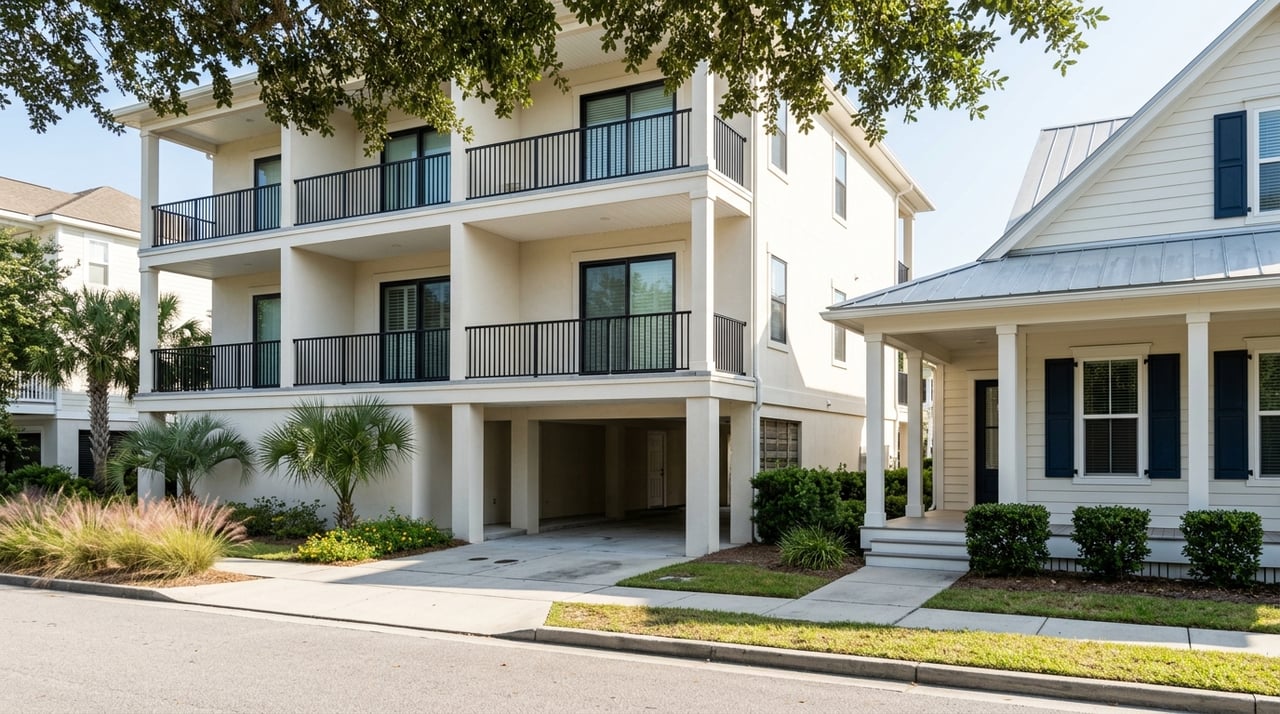
Gulfport Condos vs Houses Near the Water
May 7, 2026
May 7, 2026
If you picture mornings near the Gulf, the big question usually is not if you want to live near the water. It is what kind of property fits your life best. In Gulfport, that often comes down to choosing between a condo and a house, and the right answer depends on your budget, your comfort with maintenance, and how you want to use the property. This guide will walk you through the tradeoffs so you can compare your options with more confidence. Let’s dive in.
A condo and a house may both put you close to the water, but you are not buying the same kind of ownership. With a condo, you typically buy the unit itself plus an ownership interest in shared common elements such as parking areas, driveways, elevators, outside hallways, recreation areas, and landscaped spaces. Those shared areas are usually governed by an association and recorded rules.
With a single-family house, you generally own the full property and take responsibility for the whole thing. That means more control over the home and lot, but it also means more direct responsibility for repairs, upkeep, utilities, taxes, insurance, and other recurring costs. For many Gulfport buyers, this is the first major fork in the road.
Near the water, ownership structure affects how your day-to-day life feels. A condo often appeals to buyers who want a more lock-and-leave setup with shared systems and shared upkeep. A house often appeals to buyers who want more privacy, yard space, and freedom to manage the property on their own terms.
Neither option is automatically better. The better fit depends on how much hands-on responsibility you want and how important shared amenities or private outdoor space are to you.
One of the biggest mistakes buyers make is comparing only the list price. In Gulfport, especially near the water, the smarter comparison is total monthly carrying cost. That is where condos and houses can look very different.
Condo or HOA dues are usually paid separately from your mortgage. Those dues can range from a few hundred dollars a month to more than $1,000, and they should be treated as part of your regular housing budget. Depending on the property, those fees may help cover master insurance and upkeep for shared areas.
With a house, you may have fewer association costs or none at all, but you will usually pay directly for exterior repairs, landscaping, and any private features on the lot. That can make monthly expenses feel less fixed and more unpredictable over time.
| Factor | Condo Near the Water | House Near the Water |
|---|---|---|
| Ownership | Unit plus shared common elements | Entire home and lot |
| Monthly dues | Often yes | May be lower or none |
| Exterior upkeep | Often shared through association | Usually owner responsibility |
| Repair exposure | More shared in some areas | More direct owner exposure |
| Budget style | More fixed monthly structure | More variable maintenance costs |
The key takeaway is simple. A condo is not always cheaper, and a house is not always more expensive. They just distribute costs in different ways.
In Gulfport, insurance is not a side issue. It is part of the core decision. The Mississippi Insurance Department advises homeowners to check whether a policy includes windstorm coverage, and it notes that windstorm damage may be available through the Mississippi Windstorm Underwriting Association if it is excluded from a standard policy.
The same state guidance says standard homeowners policies do not cover flood damage caused by rising water. It also notes that hurricane season runs from June through November and that flood insurance written through the National Flood Insurance Program generally has a 30-day waiting period. If you are shopping for property near the water, timing and policy details matter.
For condo buyers, insurance can be more complex than it first appears. A condo association may carry insurance on the building or common structure, while the unit owner may need separate coverage for contents and certain interior elements depending on the association policy. That means you need to read both the master policy and your own unit-level policy carefully.
In Mississippi, the common condo or townhouse policy form is often HO-6, while a standard homeowner package may be HO-3. On the Coast, including Harrison County, the Mississippi Windstorm Underwriting Association is directly relevant for wind and hail coverage. This is one reason condo buyers need to review more than the unit itself.
One of the most important things to know about Gulfport waterfront and near-water property is that flood risk is highly specific to the parcel. The City of Gulfport GIS includes flood hazard zones, base flood elevations, coastal transects, and a limit of moderate wave action layer. In plain terms, two homes that seem close together can carry different risk profiles.
That is why broad neighborhood assumptions can lead buyers in the wrong direction. Instead of asking only whether an area is near the water, it is smarter to review the exact property and its mapped conditions. That applies whether you are comparing a condo building or a single-family house.
Before you move forward on a near-water property in Gulfport, make sure you review:
This extra review can save you from surprises after closing.
When you buy a house, your focus is often on the property condition, location, and insurance picture. When you buy a condo, you still need to evaluate those things, but you also need to understand the association behind the property. That is a major difference.
Condo dues are a recurring housing obligation, and if they go unpaid, they can lead to debt collection efforts and even foreclosure. That makes dues more than a line item. They affect affordability today and flexibility later.
HUD also notes that condo financing can involve project-level review, including factors such as insurance coverage, financial condition, title, and other project characteristics. So if you are comparing a condo with a house, remember that a condo can involve more document review beyond the unit itself.
If you are considering a condo near the water in Gulfport, ask for clarity on:
Those answers help you compare convenience against cost and control.
Some buyers look at coastal property with part-time use or rental income in mind. In Gulfport, that requires more than a quick assumption based on location or building type. The city’s zoning code makes clear that short-stay lodging is a regulated use.
The code defines hotel use in a way that includes nightly and weekly vacation rentals in one- and two-family dwelling units. It also separately defines multiple-family or condominium property as a residential building with individual units and common areas maintained with HOA involvement. The practical takeaway is that rental potential depends on both zoning and the documents tied to the property.
For condo buyers, governing documents matter just as much as city rules. Association declarations, bylaws, and CC&Rs can limit how a unit may be used, even if the zoning appears favorable at first glance. If rental use is part of your plan, review those documents before you make assumptions.
This is especially important for second-home buyers and investors who want flexibility. A condo may offer convenience and shared upkeep, but it may also come with more use restrictions than a house.
The best choice is often the one that fits the way you want to live. Gulfport’s waterfront zone includes public parks and piers such as Jones Park, which is part of what draws so many buyers to this stretch of the Coast. Some people want a simple home base near the water with less upkeep, while others want room to spread out and manage their own property.
A condo may fit you better if you want shared amenities, less day-to-day exterior maintenance, and a more streamlined setup. A house may fit you better if you want more privacy, outdoor space, and fewer association-level constraints. Both can support a coastal lifestyle, but they do it differently.
If you are weighing both options, focus on these three questions first:
If you want simpler upkeep and are comfortable reviewing association rules and fees, a condo may be a strong fit. If you want more autonomy and are prepared for more direct maintenance and insurance planning, a house may make more sense.
Buying near the water in Gulfport is about more than the view. It is about choosing the ownership structure, cost pattern, and level of responsibility that support your goals now and later. If you want local guidance on comparing properties block by block, Glenn-Marie Fitzgerald can help you sort through the details with a Gulf Coast perspective.
Stay up to date on the latest real estate trends.
Get assistance in determining current property value, crafting a competitive offer, writing and negotiating a contract, and much more. Let me guide you through your home-buying journey.
GLENN-MARIE FITZGERALD
2137 E PASS RD GULFPORT MS 39507